

Neglected maintenance doesn’t just make your facility look neglected—it directly impacts revenue. Self storage maintenance plays a critical role in protecting rentals, renewals, and long-term property value. When a customer sees peeling paint, flickering lights, broken gates, potholes, or dirty hallways, they start having second thoughts about whether your facility is their best option.
The good news is that maintenance is one of the most controllable ways to protect your NOI (net operating income), and it doesn’t have to be complicated. StorSuite’s third party management team can help you design a maintenance plan that will keep your property looking and feeling like new and save you money in the long run. Give us a call, and watch your business skyrocket.
In the meantime, discover how preventive maintenance helps you catch small problems before they become emergency repairs or move-outs.
Don’t Let Minor Problems Become Costly Repairs
HVAC Systems: Protect Climate-Controlled Revenue
The U.S. Department of Energy notes that operations and maintenance best practices can reduce annual energy bills by 5% to 20%, especially when HVAC and lighting systems are part of the plan.
If you offer climate-controlled units, HVAC maintenance is critical. Dirty coils, clogged filters, poor airflow, failing thermostats, and ignored humidity issues can increase energy use and shorten equipment life.
A regular HVAC plan should include filter changes, coil cleaning, drain line checks, thermostat calibration, belt inspections, refrigerant checks, and seasonal service before peak heating or cooling demand.
Lower utility bills and longer equipment life result in savings for you.
Lighting: Save Energy and Improve Safety
Lighting affects security, curb appeal, and operating costs. Old, inefficient fixtures waste money and burned out or broken fixtures make your facility feel unsafe.
Replace failing lights quickly, inspect timers and photocells, clean lenses, and upgrade to efficient LEDs where it makes sense. According to the Department of Energy, LEDs use at least 75% less energy and last up to 25 times longer than incandescent lighting.
For a self storage facility with exterior lights, hall lights, office lights, and security lighting, that can mean real savings in both electricity and labor.
Structural and Paving: Stop Small Cracks From Becoming Big Bills
Cracked asphalt, potholes, uneven concrete, and settling sidewalks not only look unsightly but create liability risk. This type of deterioration makes it more difficult for tenants to navigate heavy vehicles. Even worse, it creates a danger of injury from falls.
Your maintenance plan should include routine pavement inspections, crack sealing, pothole repair, striping, drainage correction, and checks around building foundations. The Federal Highway Administration describes pavement preservation as a cost-effective way to extend pavement life.
Roll-Up Doors: Keep Units Rent-Ready
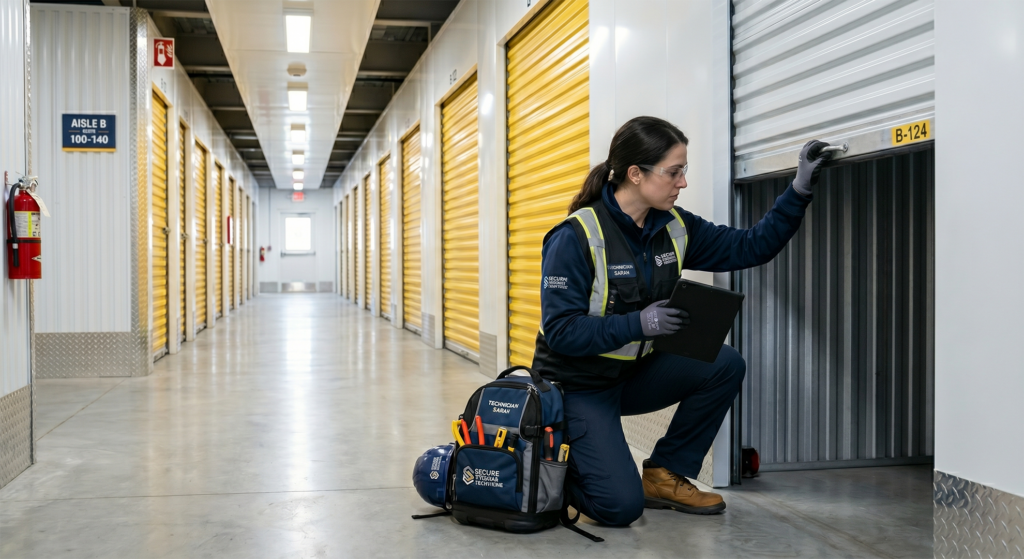
A storage unit with a hard-to-open roll-up door feels neglected even if the space inside is clean. Worse, a failed door can delay move-ins and create security concerns.
Inspect springs, latches, tracks, stops, weather seals, and door tension regularly. Lubricate moving parts and repair small alignment issues before doors become inoperable. The money savings are simple: fewer emergency repairs means fewer unrentable units and less wasted time.
Exterior Paint: Curb Appeal That Protects Revenue
Imagine that you’re buying a home and you drive up to a house with peeling paint, faded doors, rust stains, and dirty exterior walls. Would you even get out of the car? Customers feel the same way about a self storage property.
A facility that isn’t well-maintained gives the impression that owners don’t care about their property or their tenant’s belongings. A planned paint and touch-up schedule protects curb appeal and helps prevent corrosion, water intrusion, and deterioration.
Don’t wait until the whole property needs a major repaint. Budget for annual touch-ups, rust treatment, pressure washing, and phased repainting.
Roof, Gutters, and Drainage: Avoid An Expensive Surprise
Water is one of the fastest ways to turn a profitable facility into a claims problem. Roof leaks can damage tenant belongings and cause negative reviews. Gutters and drains deserve the same attention as the roof itself because water that doesn’t move away from the building can cause excessive damage
Inspect roof panels, seams, gutters, downspouts, and drainage paths. Clean debris and verify that water flows away from buildings. The Building America Solution Center notes that gutters, perimeter drains, sloped grading, and related water-management practices help protect foundations from water damage.
Security Systems: Prevent Losses and Protect Trust
Cameras, alarms, monitors, recording equipment, perimeter fencing, and access logs only protect you when they actually work. Avoid a dead camera or failed recorder by scheduling regular camera checks, alarm tests, software updates, and fence inspections.
Consistent maintenance keeps your security system reliable, reducing risk and supporting tenant confidence.
Access Systems, Gates, and Keypads: Keep Revenue Moving
When your gate fails customers are unhappy, and when your keypad is unreliable, your staff gets calls.
Preventive maintenance should include gate operator inspections, keypad testing, loop detector checks, battery backup testing, software updates, access-code audits, and physical cleaning. Fewer after-hours emergencies, fewer frustrated tenants, and less staff time spent trouble shooting mean smoother operations and more revenue.
Pest Control Management: Avoid Infestations Before They Spread
Pest problems can damage stored goods, and make a facility look careless. If you don’t want bad reviews and wasted time for staff, be sure a good prevention strategy is in place.
Implement a solid pest management plan that includes inspections, sealing gaps, removing food sources, managing trash, trimming vegetation, treating problem areas, and documenting activity. As an additional safeguard against pest infestations, educate tenants to avoid storing anything that attracts bugs and rodents.
Facility Maintenance Checklist
Use this list as a starting point for your regular maintenance plan:
- Change HVAC filters and schedule seasonal HVAC service
- Inspect climate-controlled units for humidity, odors, and airflow issues
- Walk pavement for cracks, potholes, drainage problems, and faded striping
- Test roll-up doors, latches, tracks, seals, and springs
- Touch up paint, remove rust, and pressure wash high-visibility areas
- Inspect roofs, gutters, downspouts, and drainage paths
- Test cameras, alarms, recorders, fencing, and monitoring equipment
- Replace burned-out lights and inspect timers, sensors, and photocells
- Test gates, keypads, access controls, batteries, and entry logs
- Inspect for pests, seal gaps, clean trash areas, and document treatments
Conclusion
Preventive maintenance saves real money because it protects the customer experience and limits avoidable repairs. When your property looks safe, clean, and professionally managed, customers are more likely to rent, stay, and recommend your facility.